
 ไทย
ไทย  Japanese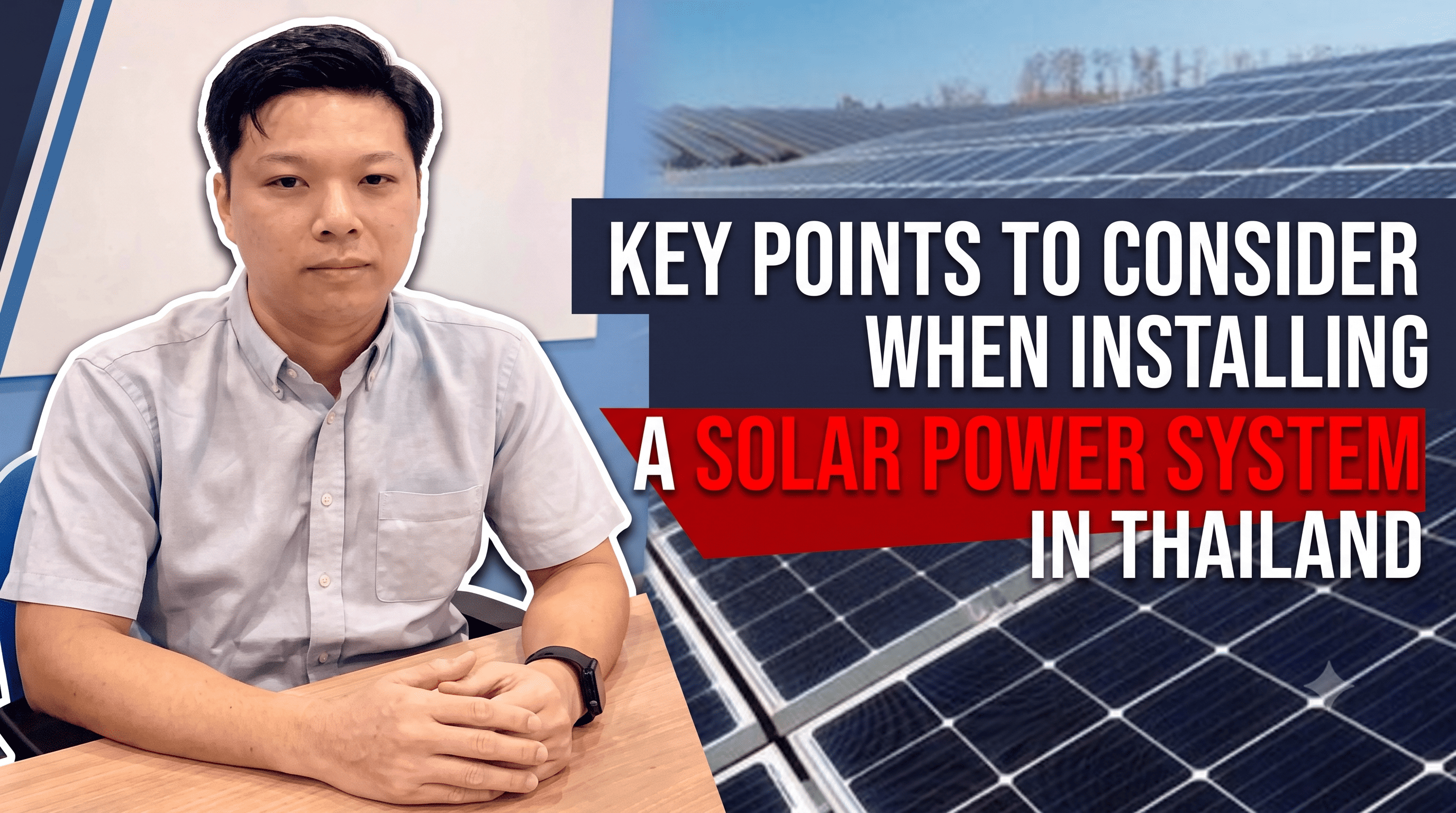
*This article is a republication of content originally featured in "Samurai Asia".
Interviewer: Samurai Asia
With rising electricity costs and growing awareness of environmental sustainability, the number of companies implementing solar power systems in Thailand is increasing year by year. While solar power equipment can be utilized over a long period, it involves a high amount of investment, and there are various implementation models such as PPA (Power Purchase Agreement), leasing/rental, and self-investment. Furthermore, the reality is that the number of service providers is extremely large.
Given these numerous options, what key aspects should companies focus on when evaluating their choices?
This time, we interviewed Mr. Shinohara of ITC ENEX (Thailand), who has extensive experience in the solar power business in both Japan and Thailand, to discuss the key checkpoints companies should look into before implementation.
▲ Mr. Shinohara, ITC ENEX (Thailand)
Solar Power System Implementation Checkpoints
✓ Estimated Power Generation
Are the various coefficients used in the simulation appropriate?
Compare the estimated power generation per kWp unit to ensure there are no significant discrepancies between providers.
✓ Service Provider
Whether they are a reliable provider with whom you can communicate effectively.
The alignment and feelings such as "sincerity" and "trustworthiness" that you feel from the person in charge are also crucial.
✓ Implementation Model
Understand the characteristics of each model based on the presence or absence of initial investment, and identify which service aligns best with your company's requirements.
✓ Equipment Selection
Adopt products from companies with a strong and healthy financial standing as much as possible.
It is recommended to choose products from manufacturers classified in the tier-one (Tier 1) financial credibility rating for solar panel manufacturers by Bloomberg.
✓ Special Requirements
Be sure to check for any constraints imposed by power companies.
If you receive power supply from a private power generation company, there may be certain limitations or restrictions in place.
Are the various coefficients used in the simulation appropriate?
Compare the estimated power generation per kWp unit to ensure there are no significant discrepancies between providers.
✓ Service Provider
Whether they are a reliable provider with whom you can communicate effectively.
The alignment and feelings such as "sincerity" and "trustworthiness" that you feel from the person in charge are also crucial.
✓ Implementation Model
Understand the characteristics of each model based on the presence or absence of initial investment, and identify which service aligns best with your company's requirements.
✓ Equipment Selection
Adopt products from companies with a strong and healthy financial standing as much as possible.
It is recommended to choose products from manufacturers classified in the tier-one (Tier 1) financial credibility rating for solar panel manufacturers by Bloomberg.
✓ Special Requirements
Be sure to check for any constraints imposed by power companies.
If you receive power supply from a private power generation company, there may be certain limitations or restrictions in place.
Solar Power Systems with Numerous Options Available
Editorial Dept.
In recent years, the adoption of solar power has been expanding among companies and individuals in Thailand. When moving forward with evaluations, what are the key points that companies should focus on and verify?
Mr. Shinohara
Implementing solar power equipment achieves a balance between economic efficiency and environmental sustainability, making it one of the effective means for companies to achieve carbon neutrality.
On the other hand, since it is a relatively high investment and will be used over a long period, it is important to firmly grasp the key points during evaluation. In particular, I believe the most critical points are "Estimated Power Generation," "Service Provider," "Implementation Model," "Equipment Selection," and "Special Requirements."
Power Generation Simulation — Verifying Realistic Numbers
Editorial Dept.
First, could you tell us about the "Estimated Power Generation"? What points should we focus on?
Mr. Shinohara
Naturally, the amount of power generation significantly impacts the profitability of the investment or the service implemented. Companies, in particular, would want to avoid actual performance falling significantly below prior planning.
Since solar power depends on the weather, it is impossible to predict the generation amount perfectly. However, there are elements that can reduce this risk through pre-verification.
First, it is vital to verify whether the assumptions in the simulation are appropriate. You can do this by asking providers for the rationale behind their power generation assumptions or by having them share the actual generation status of companies that have already implemented their systems.
Additionally, when receiving proposals from multiple companies, it is highly effective to compare the estimated power generation per kWp unit* to check if there are large gaps between providers.
*Annual Power Generation (kWh) ÷ Solar Panel Capacity (kWp)
Fundamentally, if the products are the latest models from mainstream manufacturers, the generation efficiency should not differ significantly based on the panels, inverters, or providers. If a large discrepancy occurs, it is likely due to differences in the coefficients and factors considered by each provider when creating their simulations. By thoroughly investigating the causes and running a re-simulation based on coefficients your company is satisfied with, you can mitigate the risk of performance shortfalls after implementation.
Service Provider Selection — Thinking from a Long-Term Perspective

Editorial Dept.
What points should be focused on when selecting a service provider?
Mr. Shinohara
Of course, the initial investment amount and service fees are important elements in provider selection, but more than that, I believe selecting a reliable provider with whom you can communicate thoroughly is the most important factor.
When installing solar power equipment, detailed meetings and application processes with the provider are required. Considering that you will use the equipment while maintaining and managing it over many years after a construction period of several months within your premises, having a partner who fully understands and addresses your company's requests—and cooperates to handle any issues that arise—leads to peace of mind and serves as a long-term benefit.
To that end, in addition to the provider's corporate credibility, it is also highly acceptable to incorporate the alignment and feelings such as "sincerity" and "trustworthiness" that your company's project team senses from the provider as a factor in the selection process.
Implementation Model — Understanding Various Service Characteristics
Editorial Dept.
With the growth of solar power-related services, companies can now choose from various implementation models. Conversely, it feels like this variety can cause confusion. How should companies approach their evaluation?
Mr. Shinohara
Implementation models for solar power equipment can be broadly divided into two categories. There is the "method of purchasing the equipment yourself" and the "subscription model requiring zero initial investment." While both can be broken down further, I recommend first categorizing them by the presence or absence of initial investment to understand their respective characteristics. From there, preferences will vary based on your company's investment policies, long-term business plans, or corporate culture, so it is important to identify which service aligns best with your company's goals.
Equipment Selection — Aligning with Company Policies
Editorial Dept.
What aspects should be emphasized regarding equipment selection?
Mr. Shinohara
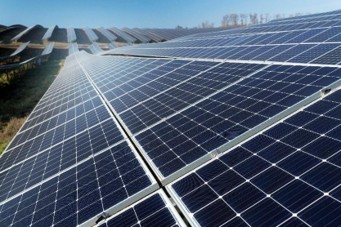
Currently, if it is a latest model from a globally high-volume manufacturer, there is almost no difference in performance or warranty details. The equipment generally used has already become commoditized, giving the impression that there have been no revolutionary advancements over the past few years.
In such a scenario, price becomes a major criteria for judgment, but the credibility of the manufacturer should also be considered. Solar panels, in particular, come with long-term warranties, but if the manufacturer goes out of business in the future, the warranty becomes meaningless. While solar power equipment experiences fewer breakdowns compared to other power generation facilities, it is crucial to adopt products from companies with a healthy financial standing at present to mitigate future risks.
As a benchmark, Bloomberg evaluates the financial credibility of solar panel manufacturers worldwide every quarter, and it is standard practice to choose products from manufacturers positioned at the top tier (Tier 1) in that evaluation.
Presence of Special Requirements
Editorial Dept.
What kind of things fall under special requirements?
Mr. Shinohara
A common case in Thailand involves constraints imposed by power companies.
If you receive power supply from a state-owned power company, installing solar power equipment is generally not an issue. However, if you are supplied by a private power company, there may be some form of limitations or restrictions established.
Additionally, in the case of rented warehouses or factories, certain conditions or restrictions are almost always set in the contract with the owner.
However, neither situation means that implementing solar power equipment is entirely impossible. There are ways to introduce systems within the limits or by installing additional equipment.
Simulating Installation Feasibility and Expected Effects is the First Step
Editorial Dept.
Based on what you have shared today, could you leave a final message for our readers?
Mr. Shinohara
If you have not started evaluating yet, please feel free to consult with us, even if it is just out of curiosity. I believe the first stage of evaluation is to check if installation is feasible for your site and to know how much effect you can expect by introducing solar power equipment.
For companies that are already evaluating options, please consider us as a new alternative. We strive for "transparent simulations," "thorough explanations," and "proposals that meet your requests," backed by a well-established support system after implementation.
If you are considering implementing a solar power system in Thailand, please contact us via the inquiry form.